COLOR TEST
By
Mohd Hanafiah B Said


.jpg)


.jpg)
.jpg)
.jpg)

.jpg)
.jpg)
.jpg)
.jpg)
.jpg)
.jpg)
.jpg)
.jpg)
.jpg)
.jpg)
.jpg)
.jpg)
.jpg)
.jpg)
.jpg)
.jpg)
.jpg)
.jpg)
.jpg)
.jpg)
.jpg)
.jpg)
.jpg)
.jpg)
.jpg)
.jpg)




Absorption Penyerapan | Uptake of fluid and solutes by living cells and tissues |
Acid rain Hujan asid | Rain formed when gases such as sulphur dioxide and oxides of nitrogen dissolve in it |
Active metal Logam aktif | A metal that reacts actively like aluminium, magnesium and zinc |
Air pressure Tekanan udara | The weight of air above any part of the Earth |
Alimentary canal Salur penghantaran | The tube in the body that takes food through the mouth to the anus |
Alkaline substance Bahan beralkali | Substance that releases hydroxyl ions ( |
Amphibian Amfibia | A vertebrate animal that can live on land and in water |
Anode Anod | In an electrochemical cell, the anode is the positively charged electrode to which the anions of the solution move to give up their extra electrons |
Anus Dubur | The part of the body from which faeces leave the body |
Appendix Umbai usus | A small hollow worm-like structure attached to the large intestine |
Aquatic Akuatik | Relating to water, such as lakes and seas |
Astigmatism Astigmatisme | Difficulty in seeing clearly that is caused by the irregular curvature of the cornea |
Balanced diet Gizi seimbang | A diet which includes different types of food substances in the right proportions and quantities |
Balance in nature Keseimbangan alam | State of the environment not having any disturbances |
Base area Luas tapak | Area occupied by a body |
Bile Jus hempedu | A thick greenish-yellow alkaline solution produced by liver and stored in a small pouch, called the gall bladder |
Biological control Kawalan biologi | A method of controlling pests (small insects that harm or destroy crops) by using other insects, birds or animals to kill them |
Blind spot Bintik/titik buta | The point in the eye, which is not sensitive to light |
Boiling Pendidihan | The change from a liquid to a gas at its boiling point |
Boiling point Takat didih | The temperature at which a substance changes from the liquid state to the gaseous state |
Buoyancy Keapungan | The ability of an object to float |
Calorific value Nilai kalori | A unit for measuring the amount of energy a particular food can produce |
Carbon cycle Kitar karbon | The circulation of carbon compounds in nature by the various life (metabolic) processes of many organisms |
Cathode Katod | The negatively charge electrode of an electrochemical cell to which cations travel and gain electrons |
Center of gravity Pusat graviti | Point of balance of an object or a point where the weight of an object acts on it |
Chitin Kitin | A nitrogen-containing polysaccharide found in some animals and the cell walls of most fungi |
Chlorination Pengklorinan | The process of adding chlorine to water to kill microorganisms |
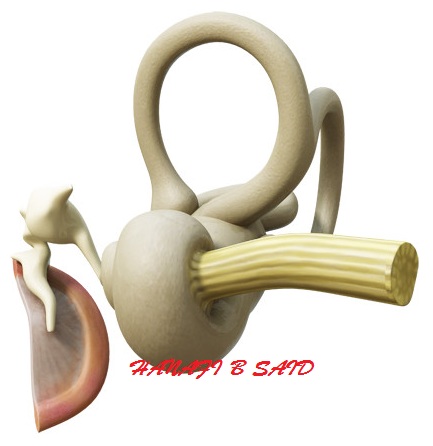
Cochlea Koklea | The part of the inner ear concerned with hearing |
Community Komuniti | A group of many different populations of organisms that interact with one another |
Competition Persaingan | The struggle between organisms for the limited resources in a habitat |
Concave lens Kanta cekung | A lens which is thinner in the middle than the edge |
Concentrated acid Asid pekat | Acid which has a high concentration |
Concentrated alkali Alkali pekat | Alkali which has a high concentration |
Concentration Kepekatan | The quantity of a substance (called the solute) dissolved in a fixed amount of liquid (the solvent) to form a solution |
Concentration solution Larutan pekat | Solution containing high amount of solutes dissolved in it |
Conservation Pemuliharaan | The act of preserving natural resources |
Constipation Sembelit | The condition of finding it difficult to empty your bowels |
Consumer Pengguna | An organism that obtains food by eating other organisms |
Convex lens Kanta cembung | A lens which is thicker in the middle than the edge |
Corrosive Mengakis | Having a property such as to destroy or causing holes in a material |
Cuticle Kutikel | An outer layer of hard skin, especially around the base of your nails |
Decomposer Pengurai | Any organism that breaks down dead organic material |
Defecation Penyahtinjaan | The elimination of indigestible substances (faeces) through the anus by contraction of the muscular walls of the rectum |
Deforestation Penebangan hutan | The process of clearing the forest |
Density Ketumpatan | The mass per unit volume of substance |
Dicotyledon Dikotiledon | Class of flowering plants having seeds with two cotyledons (seed leaves) |
Diffusion Resapan | The process by which molecules move from a highly concentrated area to a less concentrated area |
Digestion Penghadaman | The breaking down of large food particles into smaller ones for easy absorption |
Dilute acid Asid cair | Acid which is low in concentration or has more water in it |
Dilute alkali Alkali cair | Alkali which is low in concentration or has more water in it |
Dilute solution Larutan cair | Solution containing low amount of solute |
Discharge Nyahcas | Change of an ion to its element on an electrode during the electrolysis process |
Distance Jarak | The measurement of how far an object has travelled along a particular path |
Distillation Penyulingan | A process to separate a liquid from a solution by heating the solution until it boils and condensing the vapour that forms liquid |
Domestic uses Penggunaan domestik | Usage in a family or a house |
Domestic waste Bahan buangan domestik | Waste materials such as rubbish discharged from houses or residences |
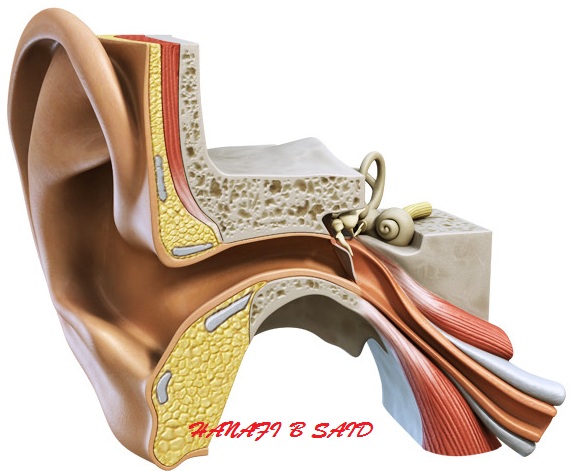
Eardrum Gegendang telinga | A tight thin skin inside the ear which allows you to hear sounds |
Ecosystem Ekosistem | A biological community together with the associated abiotic environment |
Electrolysis Elektrolisis | The process of separating a liquid into its chemical parts by passing an electric current through it |
Electrostatic force Daya elektrostatik | Force formed due to friction of two separate things coming into contact |
Endoskeleton Rangka dalam | A hard skeleton buried within the soft tissues of an animal |
Environment Persekitaran | An organism’s physical and biological surroundings |
Enzyme Enzim | Any protein molecule that acts as a natural catalyst and is found in the body of bacteria, plants and animals |
Evaporation Penyejatan | The change from a liquid to a gas at any temperature below the boiling point |
Exoskeleton Rangka luar | The hard outer covering of the body of certain animals |
Fats Lemak | A group of organic compounds that exist naturally and are called lipids |
Fertiliser Baja | A compound added to the soil to supply plants with elements needed for healthy growth |
Fibre/roughage Pelawas | A substance contained in some foods that helps the bowels movement |
Filtration Penurasan | A process used to separate an insoluble solid from a liquid in a solid-liquid mixture |
Flowering plant Tumbuhan berbunga | Plants with flowers |
Fluids Cecair | A substance that flows, i.e. a liquid or a gas |
Food chain Rantai makanan | A pathway along which energy is transferred from one organism to another, beginning with producers |
Food web Siratan makanan | The interconnected food chains in an ecosystem |
Force Daya | Something such as a push or pull, that changes the size, shape or speed of an object |
Freezing point Takat beku | The temperature at which a substance changes from the liquid state to the solid state |
Frictional force Daya geseran | A force that opposes and slows down movement; it is produced by two surfaces that are in contact |
Fulcrum Fulkrum | The point on which a lever turns, balances or is supported in turning or lifting something |
Gall bladder Pundi hempedu | The organ attached to the liver that serves as a storage organ for bile |
Gas pressure Tekanan gas | The pressure exerted by the collison of gas particles against the wall of a container |
Gravitational force Daya graviti | The force of attraction of the Earth for solids, liquids and gasses |
Geotropism Geotropisme | Response of plants towards gravity |
Greenhouse effect Kesan rumah hijau | The phenomenon whereby the surface of the Earth is warmed due to atmospheric accumulation of carbon dioxide |
Gut Salur penghadaman | The alimentary canal in which food passes through when it leaves the stomach |
Habitat Habitat | The natural place where an organism lives |
Heat Haba | Warmth or a form of energy which may be transferred by conduction, convection or radiation |
Humidity Kelembapan | The amount of water vapour in the atmosphere |
Hydrochloric acid Asid hidroklorik | An acid consisting of hydrogen and chlorine elements |
Hydrostatic Hidrostatik | The state of fluids (liquids and gases) in equilibrium |
Hydrotropism Hidrotropisme | Response of plants towards water |
Impurities Bendasing | Parts of an almost pure substance that is of a lower quality |
Industrial waste Bahan buangan industri | Waste materials or sewage, such as chemical waste and acidic gases, that are discharged by factories |
Insoluble Tidak larut | Unable to dissolve in a liquid |
Interaction Interaksi | A process by which two or more things have an effect on each other and work together |
Interdependence Saling bersandaran | A situation in which people or things depend on each other |
Invertebrate Invertebrata | An animal without a backbone |
Large intestine Usus besar | The lower part of the bowels, where food is changed into solid waste matter |
Lever Tuas | A simple machine that turns about a fixed point called a fulcrum (or pivot) when a force (the affect) overcomes a resisting force (the load) |
Litmus paper Kertas litmus | A purple dye found in lichens and is used as an indicator for acids and alkalis |
Liver Hati | A large organ in the body that functions as a gland by producing bile. The main functions of the liver are the metabolism of fats, proteins and carbohydrates and detoxification of blood. |
Load Beban | A material/body having weight |
Long-sightedness Rabun dekat | Able to see objects or read things clearly only when they are far from your eyes |
Magnetic force Daya magnetik | The force of an attraction or repulsion produced by magnets on materials such as iron and steel |
Magnitude Magnitud | The absolute value (e.g. length) of a physical or mathematical quantity |
Mammal Mamalia | A vertebrate animal which feeds milk to its young |
Medium Bahantara | A substance through which a physical quantity (e.g. force, light) travels |
Metal Logam | An element which is generally shiny, malleable, ductile and conducts heat and electricity |
Monocotyledon Monokotiledon | Class of flowering plants having seeds with one cotyledon (seed leaves) |
Monocular vision Penglihatan monokular | Sight using one eye only |
Nastic movement Pergerakan nastik | Response of plants towards touch which is not influenced by the direction of the stimulus |
Neutralisation Peneutralan | The reaction between an acid and an alkali to form a neutral solution |
Non-flowering plant Tumbuhan tidak berbunga | A plant without flowers |
Nutritious food Makanan berkhasiat | Food that contains the substances that the body needs |
Optical illusion Ilusi optik | A picture or image that tricks the eyes and makes you see something that is not actually there |
Organic solvent Pelarut organik | Non-water based solvent |
Oxygen cycle Kitar oksigen | The circulation of oxygen in nature by various life (metabolic) processes of many organisms |
Parasitism Parasitisme | A symbiotic relationship in which one species benefits in term of growth and reproduction to the harm of the other species (host) |
Periscope Periskop | A long tube with mirrors fitted in it, used to look over the top of something, especially to see out of a submarine |
Peristalsis Peristalsis | The contraction of the muscles of the alimentary canal which pushes the food along |
Perosak | A small animal or insect that destroys crops or food supplies |
Pesticide Pestisid | A chemical substance used to kill insects and small animals that destroy crops |
Photosynthesis Fotosintesis | The process by which green plants make food in the presence of light |
Phototropism Fototropisme | Response of plants towards light |
Point of equilibrium Titik keseimbangan | A point where an object can be balanced |
Pollution Pencemaran | The process of making air, water, soil, etc. dangerously dirty and not suitable for people to use |
Population Populasi | A group of individual of one species that live in particular area |
Power Kuasa | The quantity of works that done in one second |
Preservation Pemeliharaan | The degree to which something has remained unchanged or unharmed by weather, age, etc |
Pressure Tekanan | The pressure on a surface due to forces from another surface or from a fluid where the forces are acting 90o to the unit are of the surface |
Prey-predator Mangsa-pemangsa | Organism that is eaten as food (prey) by another organism (predator) |
Primary consumer Pengguna primer | An organism that eats only plants (herbivore) |
Pyramid number Piramid nombor | A representation of the numbers of organisms at different levels of a food chain, which forms a pyramid, greater numbers of organisms being present at the lower levels (e.g. producers) than at the higher levels (e.g. carnivores) |
Producer Pengeluar | An organism, particularly a plant, that make its own food |
Radioactive residue Sisa radioaktif | Radioactive waste materials discharged from industries |
Reabsorption Penyerapan semula | To absorb again something that has already been absorbed |
Receptor Hujung saraf/Reseptor | A cell or organ that is specialised to receive and respond to a particular stimulus from outside or inside the body of an organism |
Reflection Pantulan | An image reflected in a mirror or similar surface |
Refraction Pembiasan | The bending of, most commonly, a light ray when it pass from one medium to another, e.g. air to water |
Reptile Reptilia | A vertebrate animal with a dry, scaly skin which lives on land |
Residue Sisa | The insoluble solid that remains in the filter during filtration |
Response Gerak balas | Something that is done as a reaction to a stimulus |
Saliva Air liur | The liquid that is produced naturally in the mouth |
Saturated solution Larutan tepu | A solution which will not dissolve any more solute |
Secondary consumer Pengguna sekunder | Carnivore that eats herbivores |
Sediment Bahan mendapan | Solid matter that settles at the bottom of a liquid |
Sensitivity Kepekaan | Ability of an organism to be aware of the changes to the environment by using sense organs |
Sewage Bahan kumbahan | The mixture of waste from the human body and used water that is carried away from houses through pipes |
Shell Cengkerang | A hard outer part that covers or protects a nut, egg or seed and some types of animal |
Short-sightedness Rabun jauh | Inability to see objects clearly unless they are very close |
Siphon Sifon | A bent tube used for getting liquid out of a container, by holding the other end of the tube at a lower level than the container |
Skeletal system Sistem rangka | A support system in the form of hard bone or hard shell for living things |
Skin Kulit | An important organ which forms the outer covering of a vertebrate animal |
Small intestine Usus kecil | The long tube that food goes through after it has gone through the stomach |
Solubility Keterlarutan | The amount of solute (in gram) that can dissolve in 100 ml of solvent to form a saturated solution under specified conditions of temperature and pressure |
Solute Zat pelarut | A substance that dissolve in a solvent (liquid) |
Solution Larutan | A clear mixture made up of a solute dissolved in a solvent |
Solvent Pelarut | A liquid which can dissolve other substances (solute) to form a solution |
Species Spesis | A group of animals or plants which are all similar and can breed together to produce young animals or plants of the same kind |
Species extinction Kepupusan spesis | A situation in which a particular kind of animal, plant, etc no longer exists |
Speed Kelajuan | The distance travelled per unit time |
Spray Penyembur | An equipment used to spray liquids such as pesticides |
Spring balance Neraca spring | An equipment used to measure the weight of an object |
Stability Kestabilan | A condition where an object does not fall or topple over |
Starch Kanji | A storage polysaccharide in plants consisting entirely glucose |
Stereoscopic vision Penglihatan stereoskopik | Ability to see objects in three dimensions; this is only possible when the two eyes have overlapping fields of view |
Stimulus Rangsangan | Something that causes a reaction in a plant or part of the body |
Surface area Luas permukaan | The area of the outside of an object that can be measured |
Support system Sistem sokongan | A system that supports a living thing to stand up straight |
Suspension Bahan terampai | A mixture formed when a solid does not dissolve in a liquid; the mixture is usually cloudy and the solid gradually settles to the bottom of the liquid |
Symbiosis Simbiosis | A relationship between organisms, usually from two different species live together in a unique way; it may be beneficial, neutral or detrimental to one and/or the other species |
Syringe Picagari | An instrument for taking blood from someone's body or putting liquid, drugs, etc. into it, consisting of a hollow plastic tube and a needle |
Temperature Suhu | A measure of how hot or cold an object is |
Tertiary consumer Pengguna tertier | A carnivore that eats other carnivores |
Thigmotropism Tigmotropisme | Response of plants towards touch that is influenced by the direction of the stimulus |
Universal indicator Penunjuk universal/semesta | A mixture of indicator dyestuff that shows a gradual change in colour over a wide pH range. A typical formulation contains methyl orange, methyl red, bromothymol blue, and phenolphthalein and changes through red, orange, yellow, green, blue and violet. |
Universal solvent Pelarut universal | Solvent that is able to dissolve many types of solutes |
Vertebrates Vertebrata | Animals with backbones |
Villus Vilus | Small finger-like projections from the inner wall of small intestine |
Volume Isi padu | The space by which a substance or object occupies |
Water pollutant Bahan cemar air | A substance that makes water dangerously dirty and is caused by cars, factories, etc. |
Water purification plant Loji pembersihan air | A place to clean river water or rainwater so that it is safe to be used |
Water supply system Sistem bekalan air | The water provided for a building or area, or the system of lake, pipes, etc. through which it flows |
Work Kerja | The product of the force applied and the distance moved |

